
Does Homeowners Insurance Cover Sewer Line Repair? The Complete Homeowner’s Guide (2026)
Short Answer: Sometimes—but usually only when the damage is sudden and caused by a covered event. Most homeowners insurance policies do not cover sewer line repairs caused by age, wear and tear, corrosion, root intrusion, or lack of maintenance. However, some policies may cover sewer line damage caused by a covered peril, and many insurers offer optional Service Line Coverage endorsements that expand protection.
If you’re facing a sewer line repair bill that could cost anywhere from a few thousand dollars to well over $20,000, understanding exactly what your policy covers can save you thousands.
In this guide, we’ll explain:
- When homeowners insurance covers sewer line repairs
- When claims are denied
- The difference between sewer backup and sewer line coverage
- Service line insurance endorsements
- How insurance companies evaluate sewer claims
- What to do before filing a claim
- How to maximize your chances of coverage
Table of Contents
- Does Homeowners Insurance Cover Sewer Line Repair?
- When Sewer Line Damage Is Covered
- When Sewer Line Damage Is Not Covered
- Does Insurance Cover Tree Root Damage?
- Sewer Backup vs. Sewer Line Coverage
- What Is Service Line Coverage?
- Does Insurance Pay for Sewer Line Replacement?
- How Much Does Sewer Line Repair Cost?
- How to File a Sewer Line Insurance Claim
- Frequently Asked Questions
- When to Call a Sewer Professional
Does Homeowners Insurance Cover Sewer Line Repair?
The answer depends entirely on what caused the damage.
Insurance companies generally cover sudden and accidental losses.
They generally do not cover gradual deterioration, aging infrastructure, or maintenance-related issues.
A useful rule:
✅ Sudden event = Possibly covered
❌ Gradual damage = Usually not covered
Quick Coverage Chart
| Cause of Sewer Damage | Typically Covered? |
|---|---|
| Tree falls and crushes sewer line | ✅ Often Covered |
| Vehicle drives over line and causes collapse | ✅ Often Covered |
| Fire damages sewer system | ✅ Often Covered |
| Excavation accident by utility company | ✅ Often Covered |
| Tree root intrusion | ❌ Usually Not Covered |
| Corrosion | ❌ Usually Not Covered |
| Pipe deterioration due to age | ❌ Usually Not Covered |
| Bellied sewer line | ❌ Usually Not Covered |
| Poor installation from decades ago | ❌ Usually Not Covered |
| Normal wear and tear | ❌ Usually Not Covered |
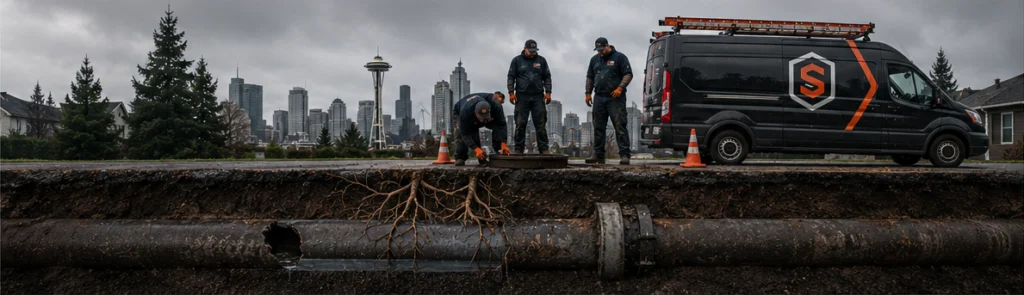
When Homeowners Insurance Usually Covers Sewer Line Damage
Insurance companies may provide coverage when a covered peril directly causes damage to the sewer line.
Examples include:
Storm Damage
A severe storm causes a tree to fall and crush the sewer line.
Vehicle Impact
A vehicle leaves the roadway and damages underground utility lines.
Fire or Explosion
An explosion or fire causes damage to the sewer system.
Sudden Accidental Damage
Unexpected events that are clearly identifiable and documented.
Coverage varies by policy, deductible, and carrier. Always review your specific policy language.
When Sewer Line Claims Are Commonly Denied
This is where most homeowners run into problems.
Insurance companies view sewer systems similarly to roofs, driveways, and HVAC systems.
They expect homeowners to maintain them.
Claims are commonly denied when the damage results from:
Tree Roots
Tree roots are among the leading causes of sewer line failures.
Unfortunately, insurers often classify root intrusion as a maintenance issue rather than a sudden loss.
Related Reading:
- Signs Tree Roots Are Growing Into Your Sewer Line
- How Sewer Camera Inspections Detect Root Damage
- Root Removal vs Sewer Line Replacement
Corrosion
Older cast iron, Orangeburg, clay, and galvanized pipes frequently fail due to corrosion or deterioration.
Most policies exclude damage resulting from gradual deterioration.
Related Reading:
- Cast Iron Sewer Line Replacement Cost
- How Long Do Sewer Pipes Last?
Wear and Tear
Insurance is designed for accidents, not aging infrastructure.
If the pipe simply reaches the end of its useful life, coverage is unlikely.
Deferred Maintenance
If evidence shows a homeowner ignored ongoing issues such as:
- Recurring backups
- Slow drains
- Persistent sewer odors
- Known root intrusion
the insurer may deny the claim.
Does Homeowners Insurance Cover Tree Root Damage?
Usually not.
Insurance companies generally classify tree root intrusion as a maintenance-related issue rather than a sudden accidental loss.
However, every policy is different.
If root damage caused a secondary event that resulted in covered property damage, portions of the claim may still qualify.
Always consult your insurance carrier.
Sewer Backup Coverage vs Sewer Line Coverage
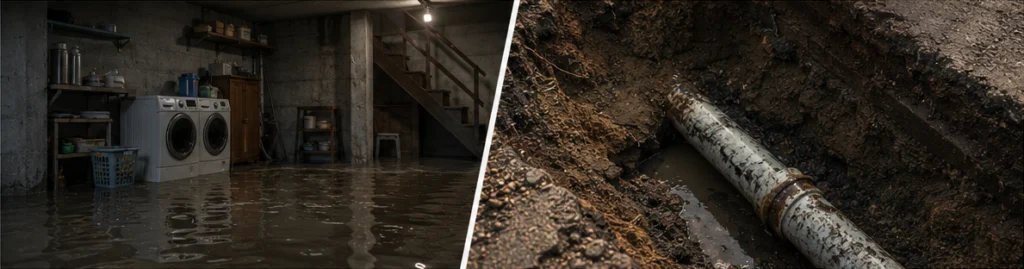
Many homeowners mistakenly believe these are the same thing.
They are not.
Sewer Backup Coverage
Protects against damage caused when sewage backs up into the home.
Examples:
- Sewage flooding a basement
- Damage to flooring
- Damaged drywall
- Ruined furniture
Most standard policies exclude sewer backup unless additional coverage is purchased.
Service Line Coverage
Protects the actual underground sewer pipe serving your home.
May help pay for:
- Excavation
- Sewer repair
- Sewer replacement
- Landscaping restoration
- Service line replacement
depending on policy language.
What Is Service Line Coverage?
Service Line Coverage is one of the most valuable endorsements homeowners can add.
Many homeowners don’t realize that the sewer lateral running from their house to the municipal main is often their responsibility.
Service line endorsements may provide coverage for:
- Sewer pipes
- Water lines
- Electrical lines
- Natural gas lines
- Communication lines
depending on the insurer.
Some policies even cover:
- Excavation costs
- Landscaping restoration
- Driveway repair
- Temporary housing expenses
depending on the endorsement.
Does Insurance Cover Sewer Line Replacement?
Sometimes.
If replacement becomes necessary because of a covered loss, insurance may pay for some or all of the replacement cost.
However, replacement resulting from:
- Age
- Corrosion
- Root intrusion
- Pipe collapse from deterioration
is usually excluded unless you have service line coverage.
How Much Does Sewer Line Repair Cost?
Costs vary dramatically depending on:
- Depth of pipe
- Pipe material
- Location of failure
- Access requirements
- Trenchless eligibility
- Local labor rates
Typical national ranges include:
| Service | Typical Cost Range |
|---|---|
| Camera Inspection | $150–$500 |
| Spot Repair | $1,500–$7,500 |
| Trenchless Repair | $3,000–$15,000+ |
| Full Replacement | $5,000–$25,000+ |
Service line insurers and utility protection programs often cite repair costs in the thousands of dollars, which is why coverage has become increasingly popular.
Related Reading:
- Sewer Line Repair Cost Guide
- Trenchless Sewer Repair Cost
- Sewer Camera Inspection Cost
What To Do Before Filing a Sewer Insurance Claim
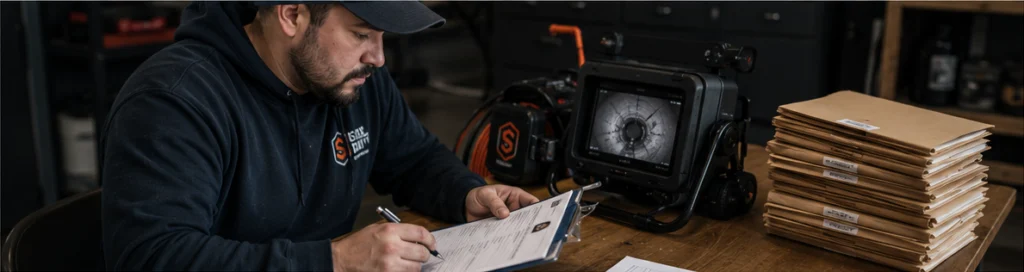
Many homeowners make a costly mistake by filing too early.
Instead:
Step 1: Schedule a Camera Inspection
A sewer camera inspection identifies:
- Root intrusion
- Pipe collapse
- Corrosion
- Bellies
- Offset joints
and provides evidence for the claim.
Related Reading:
- What Is a Sewer Camera Inspection?
Step 2: Gather Documentation
Collect:
- Inspection reports
- Video footage
- Photos
- Plumber recommendations
Step 3: Review Your Policy
Look specifically for:
- Service Line Coverage
- Water Backup Coverage
- Exclusions
- Deductibles
Step 4: Contact Your Insurance Carrier
Ask:
- Is sewer line damage covered?
- Do I have service line protection?
- What documentation is required?
Frequently Asked Questions
When to Call a Sewer Professional
Most homeowners insurance policies do not cover sewer line repairs caused by aging pipes, root intrusion, corrosion, or normal wear and tear. Coverage is generally limited to sudden accidental damage caused by covered perils. Homeowners who want broader protection should consider adding Service Line Coverage and Sewer Backup Coverage to their policies.
If you’re experiencing slow drains, recurring backups, sewer odors, or suspect a damaged sewer line, a professional sewer camera inspection is often the fastest way to determine the cause and document potential insurance claims.
Need Answers About Your Sewer Line?
Get a professional sewer camera inspection and find out exactly what’s causing the problem before spending thousands on repairs.